

Elevate your pulse survey participation rates through multi-channel integrations
With CultureMonkey, achieve higher pulse survey participation and avoid survey fatigue by implementing an employee pulse survey tool that garners survey participation from a channel that’s comfortable for your employees to respond.
TL;DR: Pulse survey participation improves when you meet employees where they already are, across email, Slack, WhatsApp, SMS, QR codes and physical kiosks, rather than relying on a single channel. A healthy participation rate typically falls between 70 and 85 percent, and anything below 50 percent usually signals fatigue or a trust issue rather than a channel problem. CultureMonkey combines anonymous multi-channel delivery with an action module that closes the feedback loop, which is what actually sustains participation over time. This page also includes a diagnostic checklist to help you identify why participation is dropping before you add another channel.
Book a free, no-obligation product demo call with our experts.







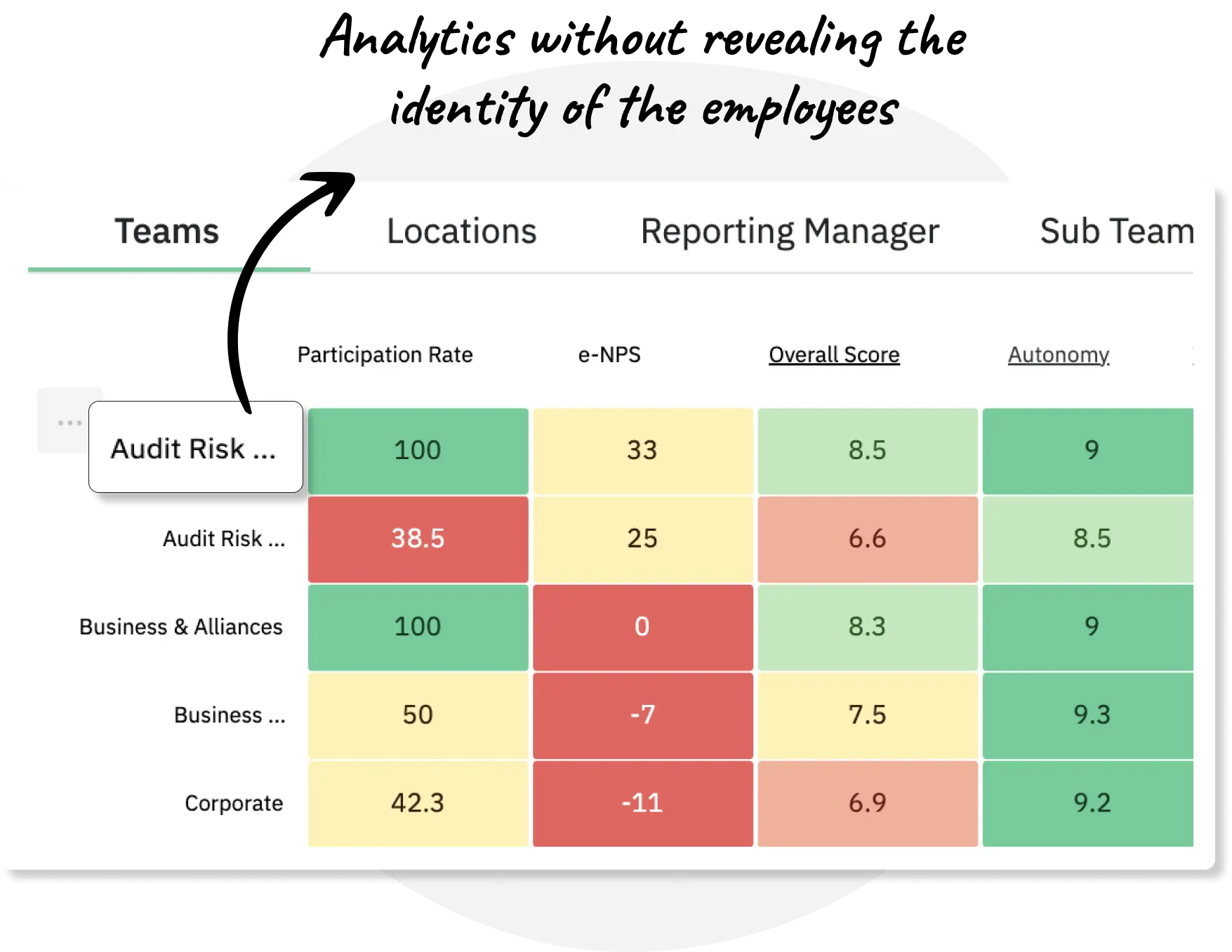
Increase pulse survey participation while respecting employee privacy
- Send anonymous reminders for your pulse surveys to make your employees give honest feedback, without the influence of their managers.
- Understand your employees’ sentiment and make data-driven decisions with 100% anonymous and unbiased feedback
- Create a more transparent and equitable workplace by focusing on analytics without being influenced by the identity of the respondents.
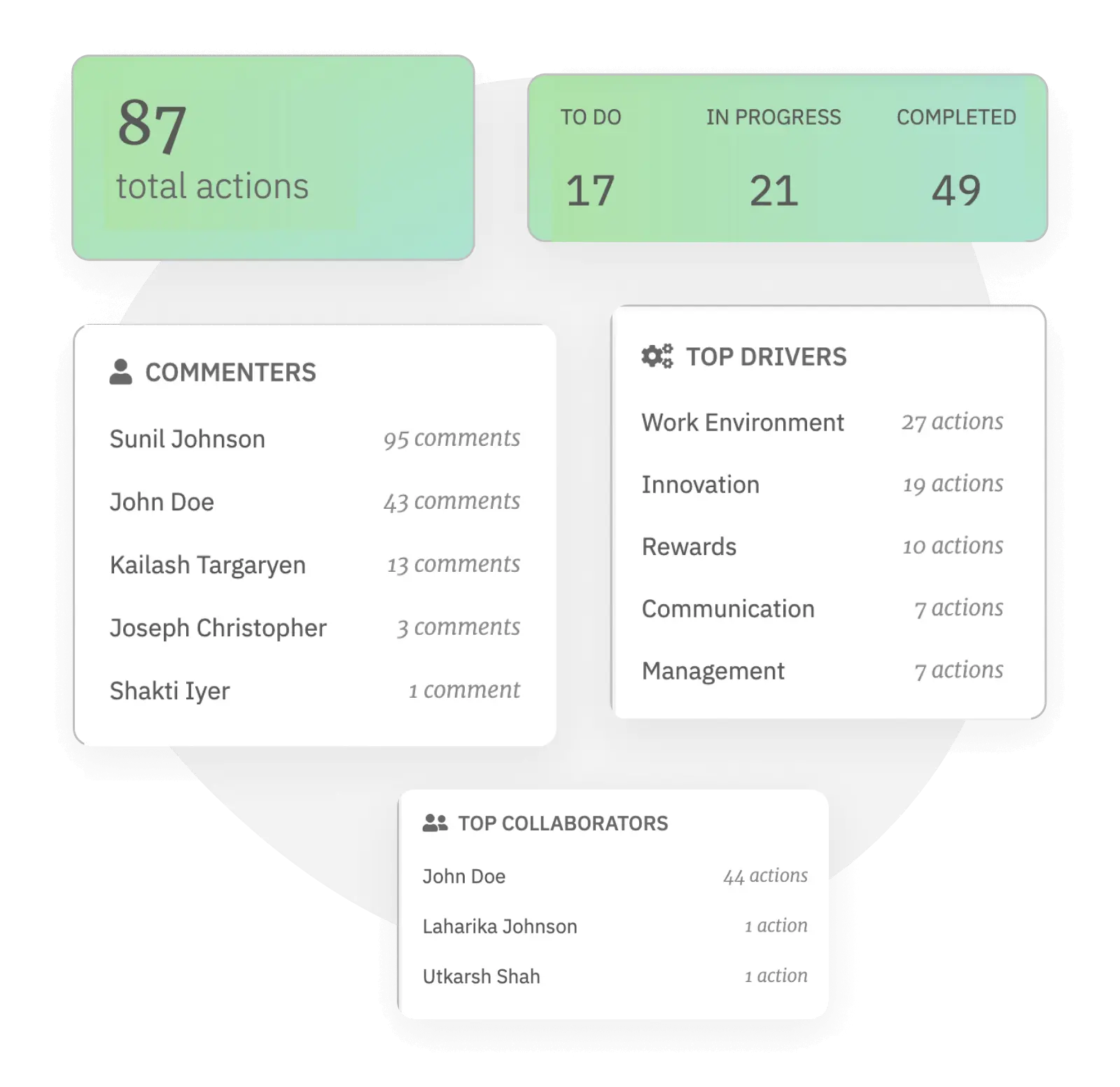
Action does increase survey participation
- Pulse feedback automatically arranged in kanban boards, for you to prioritize and take necessary actions to solve the pressing issues first.
- Leverage AI to get relevant action recommendations based on the collected pulse feedback to make informed decisions.
- Enhance trust and participation rates by anonymously acknowledging the feedback once it has been resolved.
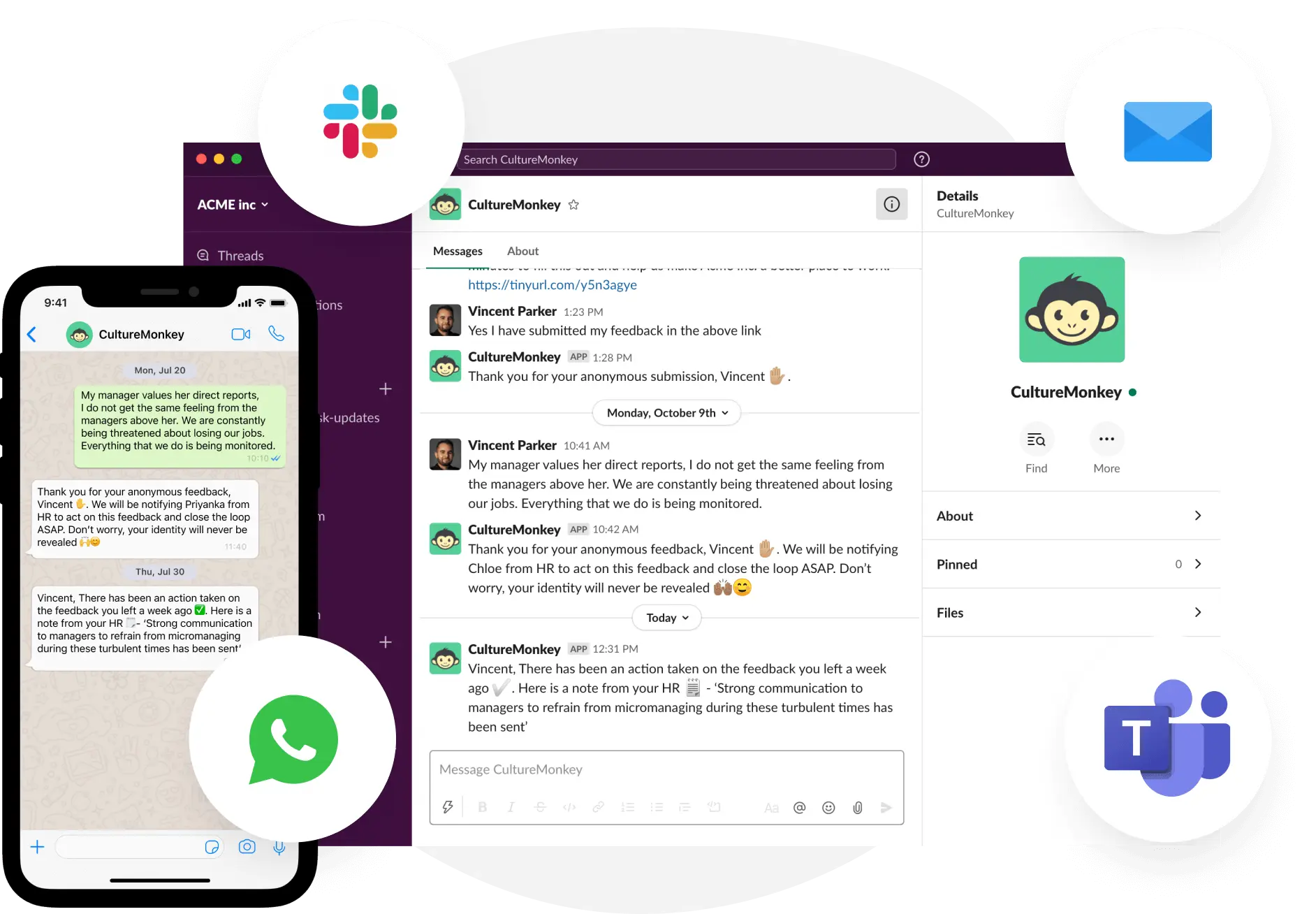
Effortlessly increase pulse feedback participation by sending surveys through Email, Slack, WhatsApp, and more.
- Send pulse surveys to your employees’ work emails to improve your survey participation rates through our employee pulse survey software.
- Reach your employees through your official communication channels like Slack or Teams to capture the real-time pulse of your employees with ease.
- Send anonymous employee pulse surveys through WhatsApp, where people are most active and can respond quickly.
Boost your pulse survey participation rates by leveraging offline channels
- Send pulse survey reminders to employees through traditional channels like SMS so they can answer from any device, increasing the overall participation rates.
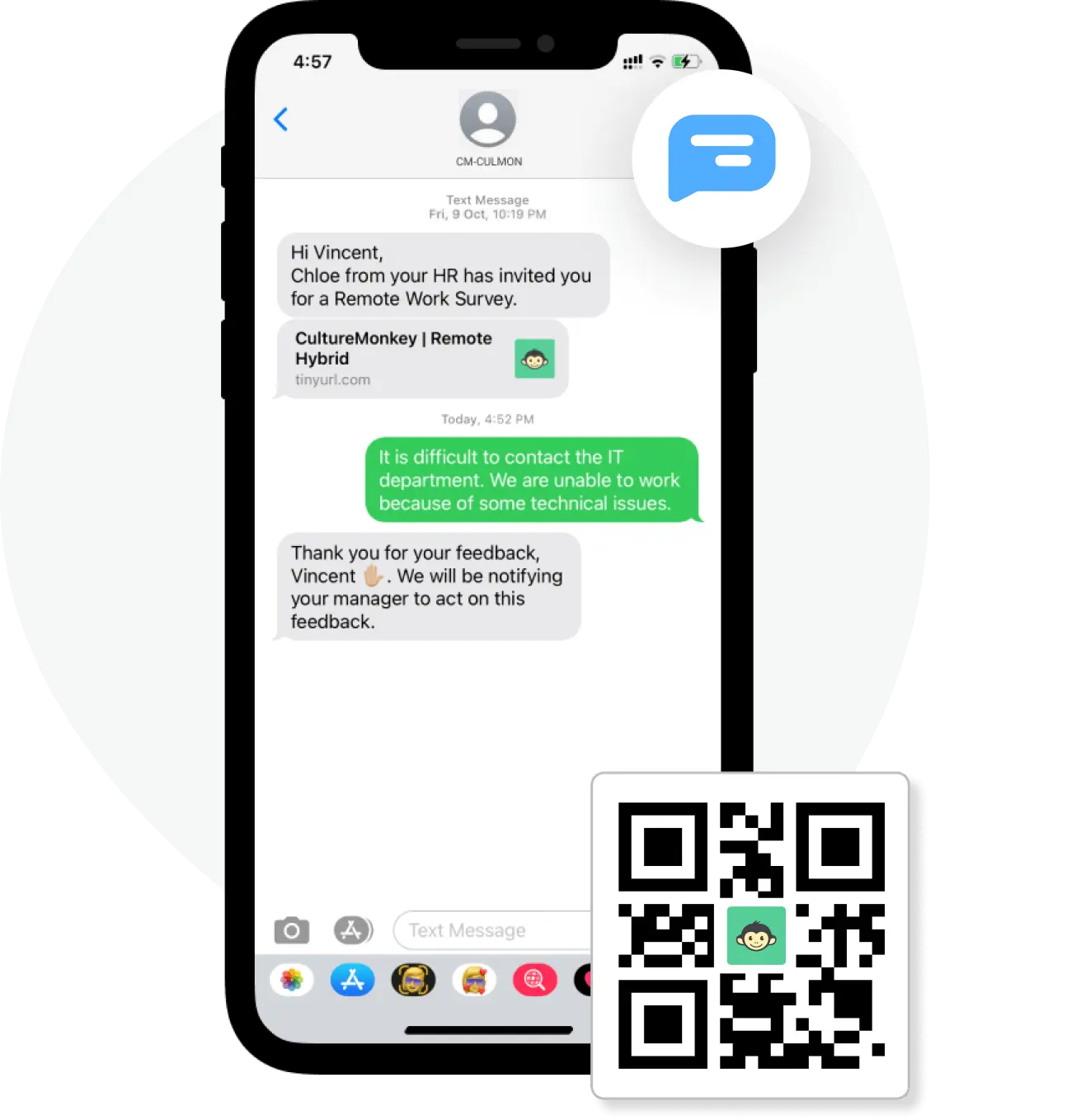
- Leverage the QR code throughout the workplace, so everyone can just scan to provide their feedback without compromising their identity.
- Dedicate a survey station in your workplace for CultureMonkey’s feedback kiosks to act as a modern feedback ballot to provide honest feedback, even without the need for any device.
Compare pulse survey channels by participation impact
| Channel | Best for | Typical response speed | Anonymity level |
|---|---|---|---|
| Formal, detailed pulse surveys | Slower (24 to 48 hrs) | High | |
| Slack / Teams | Real-time desk-based teams | Fast (same day) | Medium to high |
| Frontline, remote, mobile-first workforces | Fastest (within hours) | High | |
| SMS | Employees without email or desk access | Fast (same day) | High |
| QR code / Kiosk | On-site, non-desk workers | Immediate, in-the-moment | High |
What counts as good pulse survey participation, and how to diagnose a drop
Sending surveys through more channels only helps if you know whether your participation rate is actually healthy and, if not, why it is falling. Most organizations should treat 70 to 85 percent as a solid pulse survey participation range, with anything below 50 percent signaling a trust or fatigue problem rather than a channel problem. Before adding more channels, diagnose the drop with this checklist:
- Segment participation by department, tenure, and manager, not just company-wide. A healthy overall number can hide one team at 20 percent.
- Compare participation across your last three to five pulses. A steady decline points to survey fatigue, not a one-off dip.
- Check completion versus start rate separately. A high open rate but low completion rate usually means the survey is too long or the questions feel repetitive.
- Look at response timing. If most responses cluster on the last day, your cadence or reminder timing needs adjusting, not your channel mix.
- Cross-check silent segments against recent org changes like layoffs, reorgs, or a leadership change, since these almost always suppress participation temporarily.
- Ask managers directly why their team is not responding before assuming it is a technology or privacy issue.
Run this diagnosis every quarter so you fix the actual cause of low participation instead of just adding another channel on top of an unresolved trust issue.
What counts as a good pulse survey participation rate
Before you optimize channels, know what you are optimizing for. Participation rate is simply the number of employees who responded divided by the number invited, multiplied by 100. Most organizations should treat 70 to 90 percent as a healthy range for pulse surveys, since these are short and frequent by design. If you are below 50 percent, the issue is rarely the channel, it is usually fatigue, timing, or trust.
- Cap pulse surveys at 5 questions or fewer so they take under 2 minutes to finish.
- Send on Tuesday, Wednesday, or Thursday mornings, avoiding Mondays and Fridays when response rates drop sharply.
- Limit frequency to biweekly or monthly per team, since weekly cadences accelerate survey fatigue.
- Rotate a small bank of questions instead of repeating the same set every cycle.
- Track participation by department and manager, not just company wide, to spot pockets of silence early.
- Close the loop within 48 hours of survey close so employees see feedback is read, not archived.
- Benchmark new hires and remote employees separately, since these groups typically show 10 to 15 percent lower participation without extra nudges.
More resources on pulse surveys
What is pulse survey :A complete guide to help you assess the pulse of your organization
Understand the meaning, history, and significance of pulse surveys, and see how you can put pulse surveys...
Read moreA Complete Guide to Employee Pulse Score: Effective Tips to Use Pulse Survey Report
Ensure you are on trend with all the issues your employees face in the organization by using employee pulse scores...
Read more75 employee pulse survey questions you should be asking your employees (Updated in 2026)
Employee pulse surveys are a great tool to get ongoing visibility into employee engagement. But how to run a pulse survey and what should you...
Read moreFrequently asked questions about pulse survey participation
What is a good pulse survey participation rate?
Most organizations should treat 70 to 85 percent as a healthy pulse survey participation rate. Rates below 50 percent usually point to survey fatigue, low trust, or a channel mismatch rather than a technology issue, and should be investigated before you change your survey design or add more channels.
Why is my pulse survey participation dropping even though the survey channel works fine?
A drop in participation despite a working channel is often caused by survey fatigue, unresolved feedback from earlier pulses, or a recent org change like a reorg or layoffs. Segmenting responses by department and manager, and checking completion versus start rate, usually reveals the real cause faster than switching channels.
Which communication channel gets the highest pulse survey participation?
There is no single best channel for every workforce. Desk-based employees typically respond fastest to Slack or Teams, while frontline and remote employees respond better to WhatsApp, SMS, or QR code kiosks. The highest overall participation comes from offering two or three channels together, not from picking one.
How often should I run pulse surveys to keep participation high?
Most companies see the best participation with pulse surveys sent every two to four weeks, short enough to avoid fatigue but frequent enough to track sentiment changes. Sending pulses too often without acting on the feedback is the most common reason participation declines over time.
Does anonymity actually improve pulse survey participation rates?
Yes. Employees are more likely to respond honestly and consistently when they trust that their identity is protected, especially on sensitive topics like management or workload. Anonymous multi-channel delivery, combined with visible follow-up action, is one of the most reliable ways to sustain participation over multiple survey cycles.
What should I do if one team has much lower pulse survey participation than the rest of the company?
Segment participation by team and manager rather than relying on the company-wide average, then ask that manager directly why their team is not responding. Low participation in a single team is usually a trust or workload issue specific to that manager, not a sign that the survey tool itself is failing.
Increase your pulse survey participation and gather valuable insights about your employees' sentiments using the best pulse survey software.
Want to talk to our Culture Expert?
Book a free, no-obligation product demo call with our experts.